
Did you know that nearly 60% of new bakeries fail within the first three years? While poor recipes or bad locations get the blame, I’ve seen a much quieter killer in my ten years in this industry: equipment downtime.
I’ve walked into high-end hotel kitchens and bustling B2B bread plants where a “bargain” mixer has literally snapped a gear mid-shift, leaving 50kg of dough to die on the counter. In those moments, “cheap” becomes the most expensive word in your vocabulary.
When you’re staring at a sea of shiny stainless steel brands at an expo, it’s easy to get overwhelmed. They all promise “industrial grade” and “innovation.” But after a decade of seeing which machines are still humming at 4:00 AM and which ones are being used as expensive paperweights, I keep coming back to one name: SINMAG.
Here is why SINMAG isn’t just another brand—it’s the backbone of a profitable kitchen.
The “Workhorse” Engineering: Built for the 4:00 AM Grind
In a commercial food plant or a busy hotel, your machines don’t get “days off.” I remember a client who bought a budget spiral mixer from a nameless brand. Within six months, the motor smelled like a burnt electrical fire every time they tried to hit 70% capacity.
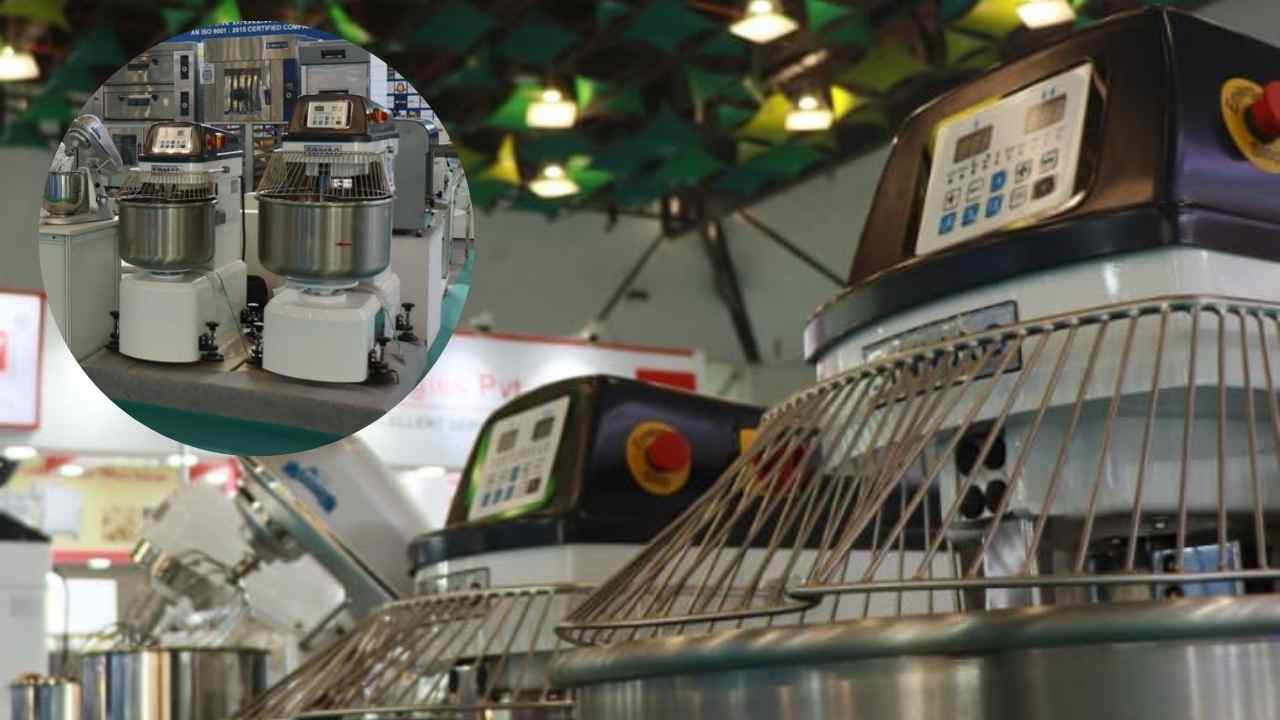
SINMAG’s Spiral Mixers and Planetary Mixers are built with a specific kind of “over-engineering.” They don’t just meet the specs; they handle the abuse.
- Why it matters: Consistency is the soul of baking. If your mixer’s RPM fluctuates because the belt is slipping, your gluten development is toast.
- The Difference: SINMAG uses high-torque motors and reinforced transmissions (like their famous belt-driven planetary systems) that maintain steady speeds under heavy loads. You get the same dough texture on the first batch as you do on the fiftieth.
Global Footprint Means Parts Aren’t “Six Weeks Away”
Here is a lesson I learned the hard way: Never buy a machine if you can’t get the spare parts at a local hardware store or from a nearby distributor. I once saw a bakery shut down for three weeks because a proprietary sensor on a fancy European oven failed, and the part had to be flown in from overseas.
SINMAG is one of the largest bakery machinery manufacturers in Asia, with a massive presence in over 40 countries.
- Why it matters: For B2B operations, downtime is lost revenue.
- The Benefit: Because SINMAG is a global standard, authorized service centers and spare parts are everywhere. Whether you’re in a metro hub or a smaller city, you aren’t stuck waiting for a shipping container to cross the ocean just to fix a bread slicer.
Thermal Precision in Ovens (No More “Hot Spots”)
If you’ve ever had to rotate trays every ten minutes in a deck oven just to get an even bake, you’re wasting labor and losing heat.
SINMAG’s Deck and Rotary Ovens are legendary for their heat retention. They use high-density insulation and precision heating elements that eliminate the dreaded “cold corner.”
- Why it matters: Every time you open that oven door to rotate a tray, you lose about 10-15% of your internal temperature.
- The Reality: In a high-volume hotel kitchen, those minutes add up to hours of wasted time and extra electricity bills. With SINMAG, you set it, forget it, and get uniform browning across the entire deck.
Scalability: From Boutique to Industrial
One thing I love about SINMAG is that they don’t just cater to the “big guys.” They have a range that grows with you.
- Small Shops: Their 5L to 10L tabletop planetary mixers are perfect for boutique pastry work.
- Industrial Plants: Their fully automated bread lines and 200kg spiral mixers can power a factory.
- Why it matters: Staying within one ecosystem makes training easier. If your staff knows how to operate a SINMAG 20L mixer, they can step up to a 50L model with zero learning curve.
The “Anti-Flimsy” Philosophy
A lot of modern equipment is moving toward plastic components and touchscreens that break if you look at them wrong. SINMAG sticks to heavy-duty stainless steel (SUS304) and robust manual/digital interfaces.
- Why it matters: Bakery environments are harsh. They’re hot, dusty with flour (which is abrasive), and damp.
- The Result: I’ve seen SINMAG sheeters from the early 2010s still rolling out perfect puff pastry. They are built to be serviced, not replaced.
The Counter-Intuitive Advice: Stop Buying “Smart” Features
Here is my “hot take” that goes against the grain: Stop looking for the “smartest” machine. In the B2B world, “smart” often means “fragile.” I’ve seen bakeries pay a 30% premium for ovens with Wi-Fi and cloud-based recipe management, only for the motherboard to fry because of a minor power surge.
My advice? Buy the machine with the best mechanical reputation. You want a machine that a local technician can fix with a wrench and a multimeter, not one that requires a software engineer from Germany to log in remotely. SINMAG strikes that perfect balance—it’s modern enough to be efficient, but “analog” enough to be reliable.
My Lesson Learned
Years ago, I helped a restaurant group set up their central kitchen. They insisted on a trendy, ultra-slim Italian mixer because it “looked better” in their open-concept kitchen. Within three months, the internal gears (which turned out to be nylon, not steel) stripped under the pressure of their heavy sourdough.
We replaced it with a SINMAG SM2-50. It wasn’t as “slim,” but it’s still running today, seven years later. The “pretty” machine ended up in a scrapyard. Don’t buy for the aesthetic; buy for the torque.
Ready to stop gambling with your production line? If you’re looking to upgrade your current setup or are planning a new facility, I can help you figure out which SINMAG models actually fit your volume needs without overspending.